
In a moment that left executives, journalists, and fellow athletes frozen in disbelief, Eliud Kipchoge reportedly accepted a staggering $65 million offer from Mike Sinyard, CEO of Specialized — only to immediately announce that he would donate the entire sum to charitable causes.
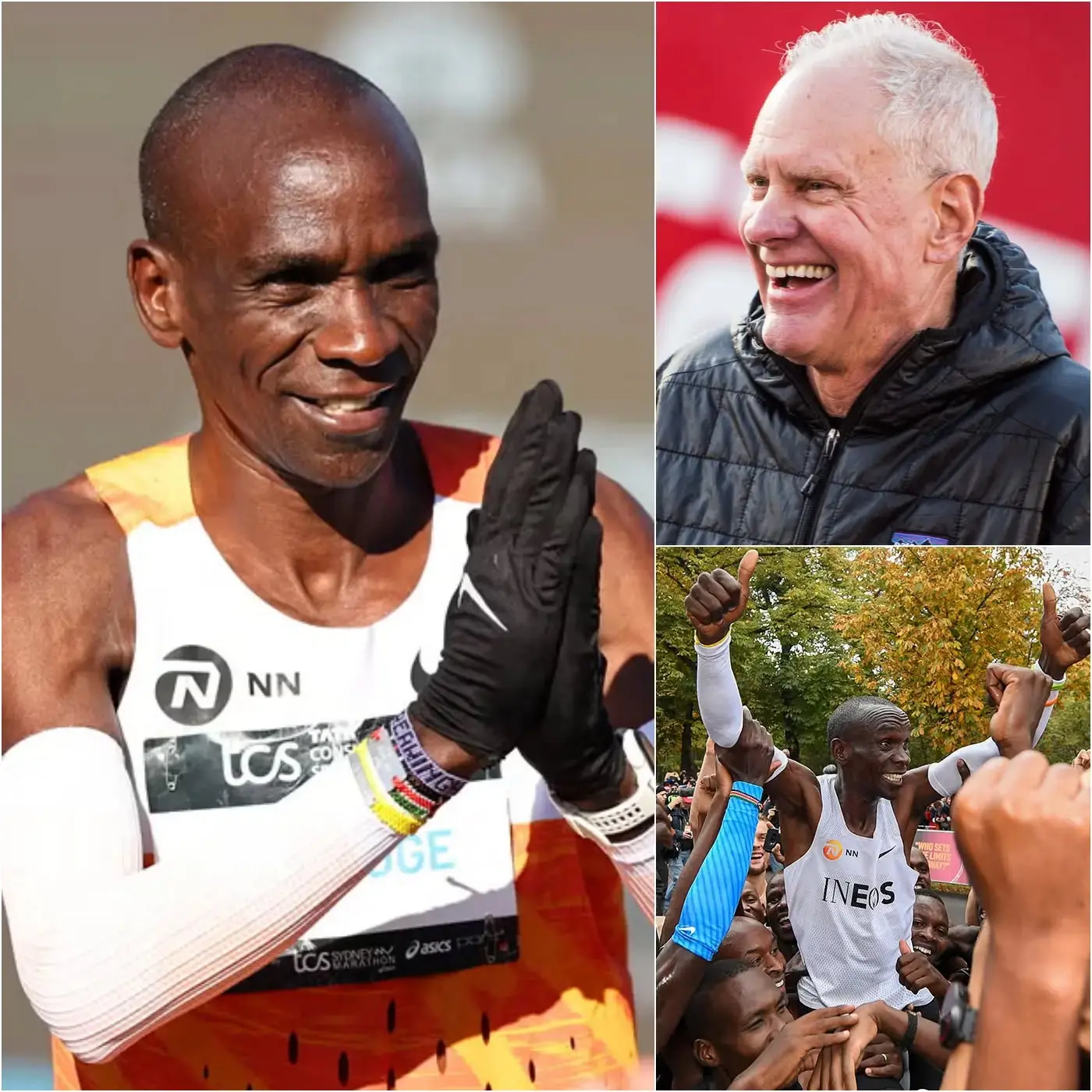
The announcement took place at a high-profile corporate event attended by global sports media and industry leaders. What was expected to be a celebratory partnership between one of the greatest marathoners in history and a dominant force in the cycling world instead turned into something far more profound.
According to attendees, the agreement had been months in the making. Specialized, known for its innovation and elite athletic partnerships, reportedly presented Kipchoge with one of the most lucrative endorsement offers ever extended to a long-distance runner. The $65 million deal was said to include brand collaboration, product development input, and long-term ambassadorial commitments.
When Kipchoge took the stage to formally accept the offer, applause filled the hall. Cameras flashed. Executives smiled. But what followed shifted the atmosphere entirely.
“Thank you for believing in me,” he began calmly. “But I want this money to truly create value for the community, because so many people need it more than I do, and I want my homeland to continue growing stronger.”
For a brief moment, many assumed it was a symbolic remark — a nod to philanthropy or a future foundation announcement. Then he clarified: every dollar of the $65 million would be directed toward charitable initiatives focused on education, youth empowerment, infrastructure, and community development in Kenya.
Gasps reportedly rippled through the audience.
Kipchoge has long been admired not only for his athletic dominance but also for his philosophy. The two-time Olympic marathon champion built his career around discipline, humility, and the mantra “No human is limited.” Yet even for someone known for moral clarity and generosity, the magnitude of this gesture stunned observers.
Sources close to his management team later indicated that the decision had been made well before the public announcement. Kipchoge had reportedly insisted that if the partnership materialized, its financial impact would extend beyond his personal success. For him, the deal was not about wealth accumulation — it was about redistribution of opportunity.
Kenya, his homeland, has produced generations of world-class distance runners, many from rural communities where resources remain scarce. Kipchoge himself trained in modest conditions before rising to global fame. Those early experiences appear to have shaped his perspective on wealth and responsibility.
Witnesses say the most powerful moment came just after his donation declaration, when Kipchoge delivered a brief 12-word statement that silenced the room:
“Success means nothing if it cannot lift someone else.”
The simplicity of the sentence carried weight far beyond its length. There were no dramatic pauses, no raised voice — just a calm certainty that reflected the mindset he has displayed throughout his career.
Mike Sinyard, visibly moved according to those present, reportedly stood and applauded before the rest of the hall followed. While corporate partnerships often revolve around return on investment and brand equity, this moment transcended conventional business narratives.
Analysts suggest the donation could support long-term educational scholarships, athletic training facilities, and community health initiatives. Though exact allocation details have not yet been publicly outlined, Kipchoge’s foundation is expected to oversee distribution in partnership with local leaders and international development experts.
The global reaction was immediate. Social media platforms filled with praise, with many calling it one of the most selfless acts in modern sports history. Fellow athletes from various disciplines described the move as “unreal,” “humbling,” and “transformational.”
For Kipchoge, however, such gestures align with his long-standing philosophy of collective growth. Throughout his career, he has emphasized teamwork even in the individual sport of marathon running. His historic sub-two-hour marathon exhibition was framed not as a personal conquest but as a demonstration of human potential achieved through collaboration.
By redirecting $65 million toward charitable causes, he appears to have extended that philosophy beyond sport and into social responsibility.
Financial experts note that very few athletes at the peak of their earning power choose to donate an entire contract sum outright. Endorsement deals often serve as financial security for life after competition. Kipchoge’s decision therefore reflects an unusual degree of confidence — not only in his own stability but in the principle that wealth achieves its highest purpose when shared.
Back in Kenya, news of the donation sparked celebration and pride. Community leaders praised the marathon legend not just as a champion on the roads of Berlin, London, and Tokyo, but as a builder of futures at home.
In the end, the most lasting image from the event may not be the oversized check or the corporate handshake. It may be the quiet composure of a man who has already conquered the limits of endurance choosing once again to challenge another boundary — the idea that success must be kept rather than given.
As applause slowly faded in the hall that day, one thing became clear: Eliud Kipchoge had redefined victory once more. Not by running faster, but by giving farther.