
In a stunning development that has electrified the global athletics community, marathon legend Eliud Kipchoge has reportedly committed to sponsoring fellow Kenyan superstar Faith Kipyegon for the next five years — a bold and symbolic gesture that many are calling a historic passing of the torch within Kenya’s golden generation of distance running.
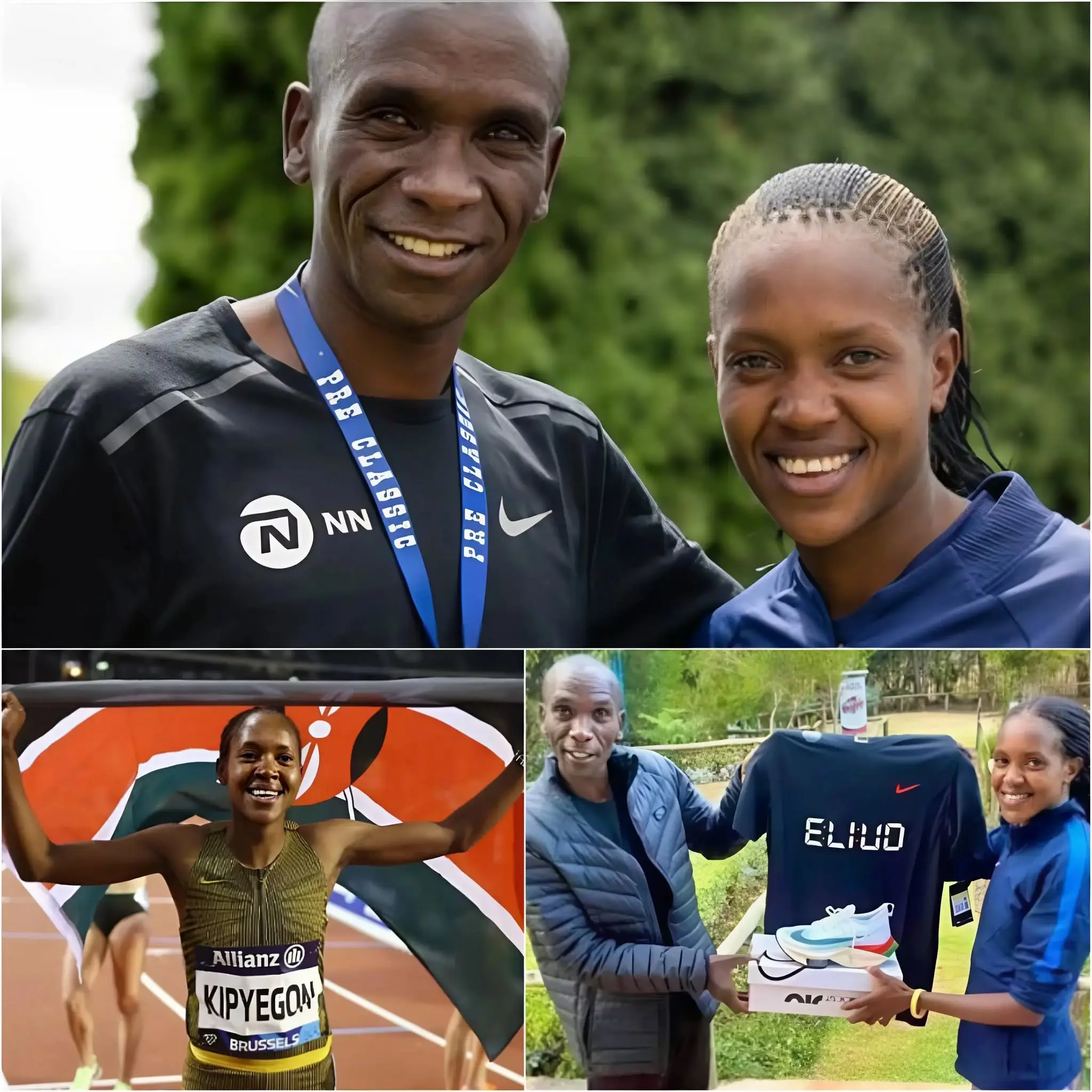
The announcement, delivered quietly at first but quickly amplified across international sports media, has been described by insiders as far more than a financial partnership. According to sources close to Kipchoge’s training camp, the two-time Olympic marathon champion has chosen to invest personally in Kipyegon’s long-term preparation, mentorship structure, and global branding strategy — signaling what some are calling a deliberate succession plan for Kenyan athletics on the world stage.
“She is the only and brightest diamond of the young athletics generation,” Kipchoge is said to have remarked in a private gathering that later became public. The phrase, simple yet powerful, has since echoed across social media platforms and sports headlines, sparking intense debate about its deeper meaning.
At 31 years old, Kipyegon is hardly a newcomer. Widely known as the “Queen of 1500m,” she has already cemented her place in history with multiple Olympic and World Championship titles. Yet Kipchoge’s endorsement appears to elevate her status beyond medals and records. It frames her as the symbolic heir to Kenya’s distance-running dynasty — a dynasty Kipchoge himself has carried for nearly a decade.
Those close to Kipchoge say his admiration for Kipyegon runs deeper than her podium finishes. He reportedly views her discipline, humility, and mental resilience as qualities that mirror the philosophy he has long championed: “No human is limited.” Observers note that both athletes have demonstrated extraordinary longevity in an era where competition grows fiercer each year.
For Kenya, a nation synonymous with distance-running excellence, the partnership carries cultural weight. Athletics is not merely a sport there — it is a national identity. From the Rift Valley’s high-altitude training camps to the grand stages of the Olympics, Kenyan runners have shaped global endurance history. Kipchoge’s decision to formally support Kipyegon signals confidence that the next chapter of that story is already in capable hands.
What makes this development even more compelling is the narrative of evolution within Kenyan athletics. Traditionally, sponsorship and mentorship structures have been driven by federations or international brands. A direct, high-profile athlete-to-athlete sponsorship of this scale represents something different: a self-sustaining legacy model. It is, in many ways, a statement that Kenyan greatness will continue to be built from within.
Analysts suggest that the five-year commitment aligns strategically with upcoming Olympic cycles and major world competitions. With Kipchoge entering the later phase of his marathon career, many have speculated about how his influence would transition once he steps away from elite racing. By investing in Kipyegon, he appears to be shaping that transition proactively rather than reactively.
For Kipyegon, the impact could be transformative. Beyond financial backing, association with Kipchoge’s globally respected brand carries immense symbolic power. Sponsors, event organizers, and younger athletes alike often look to Kipchoge as the embodiment of professionalism and excellence. His public faith in Kipyegon reinforces her already formidable reputation and may open doors to new international platforms.
Yet the story is not merely about prestige. It is also about shared philosophy. Both athletes have spoken in the past about balancing family life with elite competition — a narrative that resonates deeply with fans. Kipyegon’s return to dominance after motherhood became one of the most inspiring chapters in modern athletics. Kipchoge, a father himself, has consistently emphasized the grounding influence of family in sustaining high performance. Their partnership thus represents a fusion of performance excellence and human values.
Reactions from the athletics world have ranged from admiration to astonishment. Former champions and commentators have described the move as “visionary” and “unprecedented.” Social media in Kenya erupted with pride, with many fans calling it a defining moment that could inspire the next generation of runners training on dusty village tracks with Olympic dreams.
There is also strategic symbolism in Kipchoge’s use of the word “diamond.” In Kenyan culture, raw potential is often compared to a precious stone waiting to be polished. By labeling Kipyegon the brightest diamond, he implies not only brilliance but durability — a gem capable of withstanding pressure and emerging stronger.
If this partnership fulfills its promise, it could mark the beginning of a new era in which elite athletes actively cultivate successors, ensuring continuity of excellence beyond their own careers. For Kenyan athletics, that continuity is vital. The nation’s global reputation has been built over decades, and maintaining that dominance requires more than talent alone — it demands mentorship, infrastructure, and belief.
As the athletics calendar moves toward its next major championships, all eyes will now be on Kipyegon — not only as a reigning champion but as the chosen standard-bearer of a legacy crafted by one of the greatest marathoners in history. Whether this five-year alliance results in rewritten records and new milestones remains to be seen. But one thing is certain: the symbolic power of Kipchoge’s endorsement has already reshaped the narrative.
In a sport often defined by seconds and centimeters, moments of vision can matter just as much as finishing times. By publicly backing Faith Kipyegon as the “brightest diamond,” Eliud Kipchoge has done more than sponsor an athlete — he has cast a spotlight on the future of Kenyan athletics and, perhaps, on the next chapter of global distance-running greatness.